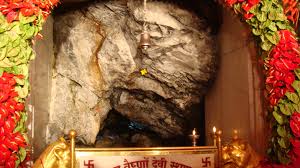
The Shakti Peeth (seat of Shakti) are
significant shrines and pilgrimage destinations in Shaktism, the
goddess-focused Hindu tradition. There are 51 or 108 Shakti peethas by various
accounts, of which between 4 and 18 are named as Maha (major) in medieval Hindu
texts.
Most of these historic places of goddess
worship are in India, but there are seven in Bangladesh, three in Pakistan, two
in Nepal, and one each in Tibet and Sri Lanka.
Various legends explain how the Shakti Peetha
came into existence. The most popular is based on the story of the death of the
goddess Sati. Out of grief and sorrow, Shiva carried Sati's body, reminiscing
about their moments as a couple, and roamed around the universe with it. Vishnu
had cut her body into 52 body parts, using his Sudarshana Chakra, which fell on
Earth to become sacred sites where all the people can pay homage to the
Goddess. To complete this massively long task, Lord Shiva took the form of
Bhairava.
Legend
Lord Brahma performed a yajna (Vedic ritual of
fire sacrifice) to please Shakti and Shiva. Goddess Shakti emerged, separating
from Shiva and helped Brahma in the creation of the universe. Brahma decided to
give Shakti back to Shiva. Therefore, his son Daksha performed several yagnas
to obtain Shakti as his daughter in the form of Sati. It was then decided that
Sati was brought into this world with the motive of getting married to Shiva.
However, due to Lord Shiva's curse to Brahma
that his fifth head was cut off due to his lie in front of Shiva, Daksha
started hating Lord Shiva and decided not to let Lord Shiva and Sati get
married.
However, Sati got attracted to Shiva and
finally one day Shiva and Sati got married. This marriage only increased
Daksha's hatred towards Lord Shiva.
Daksha performed a yagna with a desire to take
revenge on Lord Shiva. Daksha invited all the deities to the yajna except Lord
Shiva and Sati. The fact that she was not invited did not deter Sati from
attending the yagna. She expressed her desire to attend the yagna to Shiva, who
tried his best to dissuade her from going. Shiva eventually relented and Sati
went to the yagna. Sati, being an uninvited guest, was not given any respect at
the yagna. Furthermore, Daksha insulted Shiva. Sati was unable to bear her
father's insults toward her husband, so she immolated herself.
Enraged at the insult and the injury, Shiva in
his Virabhadra avatar destroyed Daksha's yagna, cut off Daksha's head, and
later replaced it with that of a male goat as he restored him to
life.Virabhadra didn't stop fighting; he kept raging with anger. Gods prayed to
lord Vishnu. He came there and started fighting him. Still immersed in grief,
Shiva picked up the remains of Sati's body, and performed the Tandava, the
celestial dance of destruction, across all creation. The other Gods requested
Vishnu to intervene to stop this destruction, towards which Vishnu used the
Sudarshana Chakra, which cut through Sati's corpse. The various parts of the
body fell at several spots all through the Indian subcontinent and formed sites
which are known as Shakti Peethas today.
At all the Shakti Peethas, the Goddess Shakti
is accompanied by her consort, Lord Bhairava (a manifestation of Lord Shiva).
Shakti is an aspect of the Supreme Being Adi parashakti, the mother of the
trimurti, the holy trinity in Hindu religion & scriptures.
Sati's self-immolation
The history of Daksha yajna and Sati's
self-immolation had immense significance in shaping the ancient Sanskrit
literature and even influenced the culture of India. It led to the development of
the concept of Shakti Peethas and thereby strengthened Shaktism. Enormous
numbers of stories in the Puranas and other Hindu religious books took the
Daksha yagna as the reason for their origin. It is an important incident in
Shaivism, resulting in the emergence of Parvati in the place of Sati Devi and
making Shiva a grihastashrami (house holder), leading to the origin of Ganesha
and Kartikeya.

Shakti Peethas are shrines or divine places of the Mother Goddess. These are places that are believed to have been blessed with the presence of Shakti due to the falling of body parts of the corpse of Sati Devi, when Lord Shiva carried it and wandered throughout Aryavartha in sorrow. There are 51 Shakti Peeth linking to the 51 alphabets in Sanskrit. Each temple has shrines for Shakti and Kalabhairava, and most Shakti and Kalabhairava in different Shakti Peeth have different names.

Shakti Peethas are shrines or divine places of the Mother Goddess. These are places that are believed to have been blessed with the presence of Shakti due to the falling of body parts of the corpse of Sati Devi, when Lord Shiva carried it and wandered throughout Aryavartha in sorrow. There are 51 Shakti Peeth linking to the 51 alphabets in Sanskrit. Each temple has shrines for Shakti and Kalabhairava, and most Shakti and Kalabhairava in different Shakti Peeth have different names.
Four Adi Shakti Pithas
Some of the great religious texts like the Shiva Purana, the Devi Bhagavata, the Kalika Purana and the AstaShakti recognize four major Shakti Peethas (centers), like Bimala (Pada Khanda) (inside the
Jagannath Temple of Puri, Odisha), Tara Tarini (Sthana Khanda, Purnagiri, Breasts) (Near Berhampur, Odisha), Kamakhya Temple (Yoni Khanda) (Near Guwahati, Assam) and Dakshina Kalika (Mukha Khanda)
(Kolkata, West Bengal) originated from the parts of the corpse of Mata Sati in the Satya Yuga.
The Ashtashakti and Kalika Purana says (in Sanskrit):
"Bimala Pada khandancha,
Stana khandancha Tarini (Tara Tarini),
Kamakhya Yoni khandancha,
Mukha khandancha Kalika (Dakshina Kalika)
Anga pratyanga sanghena
Vishnu Chakra Kshyta nacha"
Further explaining the importance of these
four Pithas, the "Brihat Samhita" also gives the location of these
Pithas as (in Sanskrit)
"Rushikulya Tatae Devi,
Tarakashya Mahagiri,
Tashya Srunga Stitha Tara
Vasishta Rajitapara" (Rushikulya is a holy river
flowing on the foothill of the Tara Tarini Hill Shrine).
In the listings below:
·
"Shakthi" refers to the Goddess worshiped at
each location, all being manifestations of Dakshayani (Sati), Parvati or Durga;
·
"Body Part or Ornament" refers to the body part
or piece of jewelry that fell to earth, at the location on which the respective
temple is built.
Temple
|
City/Town
|
State in India
|
Body Part
|
navel
|
|||
breast
|
|||
yoni (genitals)
|
|||
right toe
|
Apart from these 4 there are 51 other famous Peethas
recognized by religious texts. According to the Pithanirnaya Tantra the 51
peethas are scattered all over present day countries of India, Sri Lanka,
Bangladesh, Nepal, Tibet, Bhutan and Pakistan. The Shivacharita besides listing
51 maha-peethas, speaks about 26 more upa-peethas. The Bengali almanac,
Vishuddha Siddhanta Panjika too describes the 51 peethas including the present
modified addresses. A few of the several accepted listings are given below. One
of the few in South India, Srisailam in Andhra Pradesh became the site for a
2nd-century temple.
The List of Shakti Pithas
In the listings below (of only major):
·
"Shakti" refers to the Goddess worshipped at
each location, all being manifestations of Dakshayani, Sati; later known as
Parvati or Durga;
·
"Bhairava" refers to the corresponding consort,
each a manifestation of Shiva;
·
"Body Part or Ornament" refers to the body part
or piece of jewellery that fell to earth, at the location on which the
respective temple is built.


Sr. No.
|
Place
|
State in India/Country
|
Body Part or Ornament
|
Shakti
|
Bhairava
|
1
|
A.Amarnath Temple, from Srinagar through
Pahalgam 94 km by Bus, Chandanwari 16 km by walk
B. Shri Parvat in Ladakh |
Jammu and Kashmir
|
A. Throat
B. Anklet |
Mahamaya
|
Trisandhyeshwar
|
2
|
At a village also named as Attahas or
Ashtahas around 2 km east of Labhpur village road in the district of
Birbhum
|
West Bengal
|
Lips
|
Phullara
|
Vishvesh
|
3
|
Bahula, on the banks of Ajay river at
Ketugram, 8 km from Katwa, Burdwan
|
West Bengal
|
Left arm
|
Goddess Bahula
|
Bhiruk
|
4
|
Bakreshwar, on the banks of Paaphara river,
24 km distance from Siuri Town [a district headquarter], district
Birbhum, 7 km from Dubrajpur Rly. Station
|
West Bengal
|
Portion between the eyebrows
|
Mahishmardini
|
Vakranath
|
5
|
Bhairavparvat, at Bhairav hills on the banks
of Shipra river in the city of Ujjaini. These Shaktpeeth known as Harsiddi
temple.
|
Madhya Pradesh
|
Elbow
|
Avanti
|
Lambkarna
|
6
|
Bhabanipur, located in the Upazila of
Sherpur, Bogra, Rajshahi Division. Also located at Karatoyatat, it is about
28 km distance from the town of Sherpur.
|
Bangladesh
|
Left anklet (ornament)
|
Aparna
|
Vaman
|
7
|
Chhinnamastika Shaktipeeth at Chintpurni, in
Una District of Himachal Pradesh
|
Himachal Pradesh
|
Feet
|
Chhinnamastika
|
Rudra Mahadev
|
8
|
Muktinath Temple[10]
|
Nepal
|
Temple
|
Gandaki Chandi
|
Chakrapani
|
9
|
Goddess Bhadrakali on banks of Godavari in
Nashik city (Saptashrungi)
|
Maharashtra
|
Chin (2 parts)
|
Bhramari
|
Vikritaksh
|
10
|
Hinglaj
|
Pakistan
|
Bramharandhra (Part of the head)
|
Kottari
|
Bhimlochan
|
11
|
Jayanti at Nartiang village in the Jaintia
Hills district. This Shakthi Peetha is locally known as the Nartiang Durga
Temple.
|
Meghalaya
|
Left thigh
|
Jayanti
|
Kramadishwar
|
12
|
Jeshoreshwari Kali Temple
|
Bangladesh
|
Palms of hands and soles of the feet
|
Jashoreshwari
|
Chanda
|
13
|
Jwalaji, Kangra from Pathankot alight at
Jwalamukhi Road Station from there 20 km
|
Himachal Pradesh
|
Tongue
|
Siddhida (Ambika)
|
Unmatta Bhairav
|
14
|
Kalipeeth, (Kalighat, Kolkata)
|
West Bengal
|
Right Toes
|
Kalika
|
Nakuleshwar
|
15
|
Kalmadhav on the banks of Son River in a
cave over hills near to Amarkantak
|
Madhya Pradesh
|
Left buttock
|
Kali
|
Asitang
|
16
|
Kamgiri, Kamakhya, in the Neelachal hills in
Guwahati
|
Assam
|
Genitals
|
Kamakhya
|
Umanand
|
17
|
Kankalitala, on the banks of Kopai River
10 km north-east of Bolpur station in Birbhum district, Devi locally
known as Kankaleshwari
|
West Bengal
|
Pelvis
|
Devgarbha
|
Ruru
|
18
|
Kanyashram of Balaambika - The Bhagavathy
temple in Kanyakumari, the southernmost tip of mainland India, Tamil Nadu
(also thought to be situated in Yunnan province, China)
|
Tamil Nadu
|
Back
|
Sarvani
|
Nimish
|
19
|
Karnat, Brajeshwari Devi, Kangra
|
Himachal Pradesh
|
Ears
|
Jayadurga
|
Abhiru
|
20
|
Kireet at Kireetkona village, 3 km from
Lalbag Court Road station under district Murshidabad
|
West Bengal
|
Crown
|
Vimla
|
Sanwart
|
21
|
Locally known as Anandamayee Temple.
Ratnavali, on the banks of Ratnakar river at Khanakul I Krishnanagar,
district Hooghly
|
West Bengal
|
Right Shoulder
|
Kumari
|
Ghanteshwar
|
22
|
'A.Locally known as Bhramari Devi in
Jalpaiguri near a small village Boda on the bank of river Teesta or
Tri-shrota (combination of three flows) mentioned in Puranas
B.Ma Malai Chandi Temple at Amta, Howrah |
West Bengal
|
A. Left leg
B. Part of Left Knee |
Bhraamari
|
Ambar
|
23
|
Manas, under Tibet at the foot of Mount
Kailash in Lake Manasarovar, a piece of Stone
|
China
|
Right hand
|
Dakshayani
|
Amar
|
24
|
Manibandh, at Gayatri hills near Pushkar
11 km north-west of Ajmer. People know this temple as Chamunda Mata
Temple.
|
Rajasthan
|
Wrists
|
Gayatri
|
Sarvanand
|
25
|
Mithila, near Janakpur railway station on
the border of India and Nepal
|
Nepal
|
Left shoulder
|
Uma
|
Mahodar
|
26
|
Nainativu (Manipallavam), Northern Province,
Sri Lanka. Located 36 km from the ancient capital of the Jaffna kingdom,
Nallur. The murti of the Goddess is believed to have been consecrated and
worshipped by Lord Indra. The protagonist, Lord Rama and antagonist, Ravana
of the Sanskrit epic Ramayana have offered obeisances to the Goddess. Naga
and Garuda of the Sanskrit epic Mahabharata; resolved their longstanding
feuds after worshipping this Goddess.
|
Sri Lanka
|
Silambu (Anklets)
|
Indrakshi (Nagapooshani / Bhuvaneswari)
|
Rakshaseshwar (Nayanair)
|
27
|
Guhyeshwari Temple
|
Nepal
|
Both Knees
|
Mahashira
|
Kapali
|
28
|
Chandranath Temple
|
Bangladesh
|
Right arm
|
Bhawani
|
Chandrashekhar
|
29
|
Panchsagar Near Lohaghat (in Champawat
District of Uttarakhand) nearly 100 km from nearest railway station
Tanakpur. पूर्णागिरी / DeviDhura Champawat
Varahi Devi
|
Uttarakhand
|
Lower teeth/ Navel
|
Varahi
|
Maharudra
|
30
|
Prabhas, 4 km from Veraval station near
Somnath temple in Junagadh district. Local People call this temple as Kali
Mandir, It is nearby Triveni Sangam.
|
Gujarat
|
Stomach
|
Chandrabhaga
|
Vakratund
|
31
|
Prayaga Madhaveswari known as Alopi Mata
near Sangam at Allahabad
|
Uttar Pradesh
|
Finger
|
Lalita
|
Bhava
|
32
|
Present day Kurukshetra town or Thanesar
ancient Sthaneshwar
|
Haryana
|
Ankle bone
|
Savitri/BhadraKali
|
Sthanu
|
33
|
Sharda Peeth on top Trikoot Hill, at Maihar
|
Madhya Pradesh
|
necklace[11]
|
Shivani
|
Chanda
|
34
|
Nandikeshwari Temple
|
West Bengal
|
Necklace
|
Nandini
|
Nandikeshwar
|
35
|
Kotilingeswar Ghat temple on the banks of
Godavari river near Rajamundry
|
Andhra Pradesh
|
Cheeks
|
Rakini or Vishweshwari
|
Vatsnabh or Dandpani
|
36
|
Naina Devi Temple
|
Himachal Pradesh
|
Right Eye
|
Mahishmardini
|
Krodhish
|
37
|
Shondesh, at the source point of Narmada
River in Amarkantak
|
Madhya Pradesh
|
Right buttock
|
Narmada
|
Bhadrasen
|
38
|
Srisailam in Shriparvat hills under Kurnool
district
|
Andhra Pradesh
|
Right anklet (ornament)
|
Shrisundari
|
Sundaranand
|
39
|
Sri Sailam, at Nallamalai hills, Andhra
Pradesh
|
Andhra Pradesh, India
|
Neck
|
Mahalaxmi
|
Sambaranand
|
40
|
Shuchi, in a Shiva temple at Suchindrum
11 km on Kanyakumari Trivandrum road
|
Tamil Nadu
|
Upper teeth
|
Narayani
|
Sanhar
|
41
|
Sugandha, situated in Shikarpur, Gournadi,
about 20 km from Barisal town, on the banks of Sonda river.
|
Bangladesh
|
Nose
|
Sugandha
|
Trayambak
|
42
|
Udaipur, Tripura, at the top of the hills
known as Tripura Sundari temple near Radhakishorepur village, a little
distance away from Udaipur town
|
Tripura
|
Right leg
|
Tripura Sundari
|
Tripuresh
|
43
|
Ujaani, at Mangalkot 16 km from Guskara
station under Burdwan district
|
West Bengal
|
Right wrist
|
Mangal Chandika
|
Kapilambar
|
44
|
Varanasi at Manikarnika Ghat on banks of the
Ganges at Kashi
|
Uttar Pradesh
|
Earring
|
Vishalakshi & Manikarni
|
Kalbhairav
|
45
|
Vibhash, at Tamluk under district Purba
Medinipur
|
West Bengal
|
Left ankle
|
Kapalini (Bhimarupa)
|
Sarvanand
|
46
|
virat nagar district alwar, near Bharatpur,
India, or Virat Nagar Patiram area Of South Dinajpur District,
|
Rajasthan Or West Bengal
|
Fingers of Left Leg
|
Ambika
|
Amritaksha
|
47
|
Vrindavan, near new bus stand on Bhuteshwar
road within Bhuteshwar Mahadev Temple, Katyayanipeeth. Vrindavan
www.katyayanipeeth.org.in
|
Uttar Pradesh
|
Ringlets of hair
|
Uma
|
Bhutesh
|
48
|
Jalandhar, from Jalandhar Cantonment Station
to Devi Talab.
|
Punjab
|
Left Breast
|
Tripurmalini
|
Bhishan
|
49
|
Baidyanath Dham
|
Jharkhand
|
Heart
|
Jaya Durga
|
Baidyanath
|
50
|
Kamakshi Amman Temple
|
Tamil Nadu
|
Odyanam(Navel)
|
Kamakshi
|
|
51
|
Jogadya (যোগাদ্যা), at Kshirgram (ক্ষীরগ্রাম) near Kaichar under
Burdwan district
|
West Bengal
|
Great Toe
|
Jogadya (যোগাদ্যা)
|
Ksheer Kantak (ক্ষীরকন্টক)
|
52
|
Pithapuram under Kakinada Port Town
|
Andhra Pradesh
|
Hip Part
|
Purohotika
|
|
53
|
Ambaji at Anart
|
Gujarat
|
Heart
|
Amba
|
Batuk Bhairav
|
54
|
Jwaladevi Temple, Shaktinagar, Sonbhadra
|
Uttar Pradesh
|
Tongue
|
Jwala Devi
|
|
55
|
Chandika Sthan, near Munger town
|
Bihar
|
Left Eye
|
Chandika Devi
|
|
56
|
Danteshwari Temple, Dantewada
|
Chhattisgarh
|
Tooth or daant
|
Danteshwari devi
|
Kapalbhairav
|
57
|
Juranpur, Nadia
|
West Bengal
|
|||
58
|
Tara Tarini, Berhampur, Ganjam
|
Odisha
|
Breast/Sthan
|
Maa Taratarini
|
Tumbeswar
|
59
|
Nalhateswari, Nalhati
|
West Bengal
|
Stomach/Nauli
|
Kalika
|
Jogesh
|
Historical
notes
First relating to Brahmanda Purana, one of the
major eighteen Puranas, it mentions
64 Shakthi Peetha of Goddess Parvati in the Bharat or Greater India including
present day India, Bhutan, Bangladesh, Nepal, Sri Lanka, some parts of Southern
Tibet and parts of southern Pakistan. Another text which gives a listing of
these shrines, is the Shakthi Peetha Stotram, written by Adi Shankara, the
9th-century Hindu philosopher.
According to the manuscript Mahapithapurana (c. 1690 –
1720 CE), there are 52 such places. Among them, 23 are located in the Bengal region, 14 of
these are located in what is now West Bengal, India, 1 in Baster
(Chhattisgarh), while 7 are in what is now Bangladesh.
Rishi Markandeya composed the 'Devi Saptashati' or the
seven hundred hymns extolling the virtues of the Divine Goddess at the
shaktipeetha in Nashik. The idol is also leaning a little to the left to listen
to the sages composition. The Saptashati or the "Durga Stuti" forms
an integral part in the vedic form of Shakti worship.
The third eye of Mata Sati fell below a tree in a
mortuary in the Ishan corner of Vakreshwar. This is on the bank of the north
flowing Dwarka river in the east of Baidyanath. Here Mata Sati is called Chandi
Bhagwai Ugra Tara and Bhairav is called Chandrachur. This Shaktipeeth is called Tarapith in Birbhum districtWest bengal, India.
18
Maha Shakti Pithas
The
modern cities or towns that correspond to these 64 locations can be a matter of
dispute, but there are a few that are totally unambiguous, these are mentioned
in the Ashta Dasa Shakthi Peetha Stotram by Adi Shankara. This list contains 18 such
locations which are often referred to as Maha Shakthi Peeths.
Sr. No.
|
Temple
|
Place
|
State in
India/Country
|
Appellation
|
Part of the
body fallen
|
Shakti
|
1
|
Sankari Peetham
|
Sankari Devi
|
||||
2
|
Adi Kamakshi Devi Temple(or Kaliyambal
Temple) behind Kama koti peetam
|
|||||
3
|
Pandua, Hoogly district
|
Pradyumna Peetham
|
Shrinkala Devi
|
|||
4
|
Krounja Peetham
|
|||||
5
|
Yogini Peetham
|
Jogulamba Devi (Yogamba)
|
||||
6
|
Srisaila Peetham
|
|||||
7
|
Shri Peetham
|
|||||
8
|
||||||
9
|
Ujjaini Peetham
|
Mahakali
|
||||
10
|
Pushkarini Peetham
|
Puruhutika
|
||||
11
|
Oddyana Peetham
|
|||||
12
|
Draksharama Peetham
|
Manikyamba devi
|
||||
13
|
Kamarupa Peetham
|
|||||
14
|
Prayaga Peetham
|
|||||
15.
|
Jwalamukhi Peetham
|
|||||
16.
|
Gaya Peetham
|
|||||
17.
|
Varanasi Peetham
|
Vishalakshi
|
||||
18.
|
Sharada Peeth (Abandoned,
now in ruins)
|
Sharada Peeth: This
temple is currently non-existent. Only ruins are found in these places. Its
ruins are near the Line of Control (LOC) between the Indian and
Pakistani-controlled portions of the former princely state of Kashmir and
Jammu. Instead, Sringeri Sharada Peetham, Sringeri in Karnataka even though not
a Shakthi Peetha, is this aspect of the goddess.
Among these, the
Shakthi Peethas at Kamakhya, Gaya and Ujjain are regarded as the most sacred as
they symbolise the three most important aspects of the Mother Goddess viz.
Creation (Kamarupa Devi), Nourishment (Sarvamangala Devi/Mangalagauri) and
Annihilation (Mahakali Devi).
18
Shakthi Peetas
1. Sri Sankari Peetam (at
Lanka)
2. Sri Simhika Peetam (at
Simhala)
3. Sri Manika Peetam (at
Dakshavati)
4. Sri Sudkala Peetam (At
Petapur)
5. Sri Bhramaramba Peetam
(Srisailam)
6. Sri Vijaya Peetam
(Vijayapura)
7. Sri Mahalakshmi Peetam
(Kolhapuri)
8. Sri Kamakshi Peetam (
Kanchipuram)
9. Sri Kuchananda Peetam
(Salagrama)
10. Sri Vikaja Peetam
(Odyana)
11. Sri Bhadreswari Peetam
(Harmyagiri)
12. Sri Mahakali Peetam
(Ujjayini)
13. Sri Vindhyavasini
Peetam (The Vindhya mountains)
14. Sri Mahayogi Peetam
(Ahicchatra)
15. Sri Kanyaka Peetam
(Kanya Kubja)
16. Sri Visalakshi Peetam (
Kashi)
17. Sri Saraswati Peetam
(Kashmira)
Asthadasa sakti Pitha
Stotram
Devanagari :
लङ्कायाम्शांकरीदेवीकामाक्षीकाञ्चिकापुरे।
प्रद्युम्नेशृङ्खलादेवीचामुण्दाक्रौञ्चपट्टणे॥
अलम्पुरेजोगुलाम्बश्रीशैलेभ्रमराम्बिक।
कोल्हापुरमहलक्ष्मीमाहुर्यमेकवीरिका॥
उज्जयिन्याम्महाकाळीपीठिकायाम्पुरुहुतिका।
ओड्ढ्यायाम्गिरिजादेवीमाणिक्यादक्षवाटिके॥
हरिक्षेत्रेकामरूपीप्रयागेमाधवेश्वरी।
ज्वालायाम्वैष्णवीदेवीगयामाङ्गल्यगौरिके॥
वारणास्याम्विशालाक्षीकाश्मीरेतुसरस्वती।
अष्ठादशैवपीठानियोनिनामपदुर्लभानिच॥
सायंकालंपठेन्नित्यम्सर्वरोगनिवारणम्।
सर्वपापहरम्दिव्यम्सर्वसम्पत्करम्शुभम्॥
लङ्कायाम्शांकरीदेवीकामाक्षीकाञ्चिकापुरे।
प्रद्युम्नेशृङ्खलादेवीचामुण्दाक्रौञ्चपट्टणे॥
अलम्पुरेजोगुलाम्बश्रीशैलेभ्रमराम्बिक।
कोल्हापुरमहलक्ष्मीमाहुर्यमेकवीरिका॥
उज्जयिन्याम्महाकाळीपीठिकायाम्पुरुहुतिका।
ओड्ढ्यायाम्गिरिजादेवीमाणिक्यादक्षवाटिके॥
हरिक्षेत्रेकामरूपीप्रयागेमाधवेश्वरी।
ज्वालायाम्वैष्णवीदेवीगयामाङ्गल्यगौरिके॥
वारणास्याम्विशालाक्षीकाश्मीरेतुसरस्वती।
अष्ठादशैवपीठानियोनिनामपदुर्लभानिच॥
सायंकालंपठेन्नित्यम्सर्वरोगनिवारणम्।
सर्वपापहरम्दिव्यम्सर्वसम्पत्करम्शुभम्॥
lankayam samkaridevi kamaksi kancikapure।
pradyumne srnkhala devi camuṇda krauncapattaṇe॥
alampure jogulamba srisaile bhramarambika।
kolhapuramahalaksmi mahuryamekavirika॥
ujjayinyam mahakaḻi pithikayam puruhutika।
oddhyayam girijadevi manikya daksavatike॥
hariksetre kamarupi prayage madhavesvari।
jvalayam vaisnavidevi gayamangalyagaurike॥
varanasyam visalaksi kasmiretu sarasvati।
asthadasaivapithani yoninamapa durlabhanica॥
sayamkalam pathennityam sarvaroganivaranam।
sarvapapaharam divyam sarvasampatkaram subham॥
pradyumne srnkhala devi camuṇda krauncapattaṇe॥
alampure jogulamba srisaile bhramarambika।
kolhapuramahalaksmi mahuryamekavirika॥
ujjayinyam mahakaḻi pithikayam puruhutika।
oddhyayam girijadevi manikya daksavatike॥
hariksetre kamarupi prayage madhavesvari।
jvalayam vaisnavidevi gayamangalyagaurike॥
varanasyam visalaksi kasmiretu sarasvati।
asthadasaivapithani yoninamapa durlabhanica॥
sayamkalam pathennityam sarvaroganivaranam।
sarvapapaharam divyam sarvasampatkaram subham॥
Translation
of the stotra
Goddess
Shankari in Sri Lanka, Kamakshi in Kanchipuram Goddess Shrinkhala in Pradymna
and Chamunda in Mysore
Goddess
Jogulamba in Alampur, Goddess Brhamarambika in Sri Shailam Goddess Maha Lakshmi
in Kolhapur and Goddess Eka Veera in Mahur
Goddess
Maha Kali in Ujjain, Purhuthika in Peethika Goddess Girija in Odhyana and
Manikya in the house of Daksha
Goddess
Kama Rupi in the temple of Vishnu, Madhaveshwari in Allahabad Goddess giving
flame in Jwala Mukhi and Mangala Gowri in Gaya
Goddess
Vishalakshi in Varanasi, Saraswati in Kashmir. These are the 18 houses of
Shakthi, which are rare even to the Devas
When
chanted every evening, all the enemies would get destroyed all the diseases
would vanish, and prosperity would be showered.