Friday, May 15, 2015

Time to Plan the Survival of Vedic Culture

By Stephen Knapp
From the information that has been provided, we can fairly safely say that since Islam existed only from 622 A.D., the majority of Muslims in India and Bangladesh today are descendants of captured, mistreated, or distressed Hindus. A blatant example of this is the story of one Nazir Ali, which appeared in a Letter to the Editor in the Weekly Organizer (New Delhi, July 13, 1997). Nazir Ali was a Muslim man who had settled in the United States. He and his family had been away from India for a long time and invited his grandfather from Mehrauli (New Delhi) to come to America to get acquainted with his grandchildren. After the grandfather's arrival, the children would gather around him in the evening for a nostalgic chat. On one such occasion Nazir Ali asked his grandfather as to why the male elders in their family always wore dhotis (the traditional Indian Hindu dress) though they were Muslims. Thereupon, to Nazir Ali's great consternation and distress, the old man broke into uncontrollable sobs and tears, and stuttered out the words, "Beta, how should I tell you? Ours was a Brahmin family owning a Hanuman temple in Merauli. But 400 years ago as victims of an invading Muslim army some of our ancestors were slain while some others with sword points pressed on their throats agreed willy-nilly to survive only as Muslims. But to keep alive the memory of our Hindu ancestry, our elders made it a rule that all males should invariably stick to the dhoti."
Hearing the heart-rending account, Nazir Ali was in a great fix. Like Nazir Ali's ancestors, a number of so-called Muslims continue to tenaciously stick to tender tokens of their Hindu ancestry, such as imprinting Ganesh on their wedding invitations, retaining a tiny Bhagavad-gita inside the Koran, calling in a Hindu priest to apply a bindi to a bride, and lisping the name of Lord Rama while doing the Namaz (Muslim prayers). Thus, Muslims in India are descendants of Hindus, some of whom still hold dear to their hearts their ancient Vedic heritage. In this same line of thought, we can also point out that most historic buildings and townships credited to Muslims are captured properties that were once Hindu. In this way, it is time to recognize the glory of Vedic India and work to preserve it and keep it the home of Vedic culture.
We must realize, however, there is much that is working against this from happening. The deterioration of Indian Vedic culture is rapidly taking place. One thing that is very prominent in causing the disintegration of Vedic culture is the so-called "secular" nature of the Indian government leaders over the past several decades. Secular should mean democratic, in which every religion is protected. However, for the sake of getting votes and approval, many politicians have pandered to the demands of Muslims, promoting Islamic interests in India at the expense of the Hindus, Sikhs, Jains, and others. They have carved up Malabar district just to create the Muslim majority district of Malappuram. There are states in which the whole school gets half-a-day off on Fridays to offer Namaz, even if only two students in a class are Muslim. Yet, for the real progress of Muslims, which depends on education and modernization, they have done nothing.
Other ways that Vedic principles are being eroded away can be recognized in the following example: Article 48 of the Indian Constitution states that, "The state shall take steps for preserving and improving the breeds, and prohibiting the slaughter of cows and calves and other milch and drought cattle." This should mean a complete ban on the slaughter of cows, bulls, and calves. Protecting and preserving cows is definitely a Vedic principle. However, the courts have interpreted this article to mean that aged and disabled bulls can be slaughtered. Taking advantage of this loophole, cattle are maimed and "certified" as disabled and then slaughtered. In the years from 1976 to 1992, beef sale has gone up from 70,000 tons to over 1,100,000 tons. This not only goes against the principles of India and Vedic culture, but it makes cows more scarce and milk expensive.
Article 44 of the Indian Constitution says: "The state shall endeavor to secure for the citizens a uniform civil code throughout the territory of India." This would include a uniform ban on polygamy, but the Muslims want to be free, and have been, from following such a law. Thus, Muslim men can easily have several wives. However, such implementation of the law would provide a greater security for Muslim womanhood, and also prevent irresponsible Hindu males from converting to Islam simply to have more than one wife.
To show even further how Congress-trained politicians, though Hindus themselves, have been following the suicidal policy of curbing Hindu rights and pampering all kinds of minorities by conferring on them special privileges can be seen in a special report. This was written by Dr. Edmund Weber and presented at the fifth International Hindu Conference in Germany in 1992. Some of the findings are: "The religious minority of 100,000 Ladakhi Buddhists are officially marked as Hindus and they, in contrast to the over 100,000,000 Indian Muslims, have no right to follow their traditional marriage law."
"The pseudo-secularism of India is not even today ready to fulfill the demands of the Hindu democrats to introduce the same civil code for all their citizens. This mentality has only the mind to maintain privileges of powerful groups.
"The pseudo-secularism discriminates particularly the Hindus in the educational area. The education bills are valid only for them, while the minorities constituted by the state are over privileged, e.g. they are exempted from all those rules.
"The Tamilnadu Education Acts do show in a special way (that a) Hindu institution must get permission before starting a school. Prior permission is not required in the case of minority [Muslim or Christian] schools.
"Hindu institutions must adopt communal representation for appointing teachers, i.e. Muslims, Christians, etc., but a Minority school need not (follow) that rule." This means that Muslim or Christian schools do not have to provide any Hindu teachers, although the community may be primarily Hindu. This is how the Vedic culture is disappearing. The most efficient way to take over a country or change the viewpoint of a population is to take over all forms of communication and the educational systems. This is the legal right that has been given by the politicians to the minority groups in India.
The report goes on: "While every Hindu school must have a school committee including teachers, Minority schools need not have such committees.
"The most dangerous kind of blockade against the renewal of Hinduism is that the great monasteries and temples in India were forced to have temple committees. . . while pseudo secularism, out of political opportunism, grants non-Hindu religions full autonomy (over) their holy buildings and places; e.g. in Kerala a non-Hindu was deliberately (made a) member of the Guruvayoor temple committee. The nomination was canceled only after a vehement protest and the non-Hindu member was replaced by a Harijan [Hindu].
"Those so-called secular governments who do not dare to interfere in any manner in the management of churches, maqbaras, mazars and mosques [of the minority groups] make unjustified and most objectionable and unethical evil attempts to take over control of Hindu Mutts and Mandirs [temples]."
This is further explained by Dr. Gopalacharya in his book, World-Wide Hindu Culture (p.v), "The anti-Brahmin movement started by the cunning policy of the Britishers was followed by the post independent Indian secular Governments, which made laws to uproot (general Hindu society) by the tenancy acts enabling the Government to make the temples, maths, and religious educational institutions lose their lands and other resources for their maintenance. For want of resources, the above institutions became defunct. The greatest tragedy was that these laws were not imposed on non-Hindu religious institutions. As their properties of the religious institutions were given special facilities, instead to get lump votes, the urgent need of the majority community is to get all the unjust laws repealed and choose only those which do justice to all the communities without partiality."
This is very important, otherwise many of these problems that we have mentioned will only increase. You find these problems today as when you have colleges run by the Catholic church in India who penalize you with a fine if you speak your native tongue on their campus. They want English only because the vernacular languages are associated with "heathen" deities. Bible and Christian prayers are mandatory at the start of class is such schools, yet secular government ministers are known to have objected to including Indianized moral and spiritual education in regular Indian schools. The Bible can be taught in Christian schools, but to impart moral codes based on the Upanishads or Puranas in regular Indian schools becomes highly objectionable.
The same thing goes on with the Muslim schools, only Urdu is spoken, not native local languages. Thus, such students grow up knowing Urdu, which assists in directing them to become Muslim converts, if they are not already Muslim. By also encouraging Muslim principles throughout India, like allowing Muslim men to have four wives and easy divorces, and have the government pick up the tab for maintaining them, is a way to break down Vedic society in India and make it an extension of Pakistan.
This same bias is viewed in other ways as well. Taxes are collected from Hindu charities but none from Muslim or Christian religious properties, which are tax-free. Even in West Bengal, the Communist-run government admits being anti-Hindu and recently pulled down a Shiva temple. Other government ministers have halted Vedic yajnas, fire rituals, because they considered it a waste of using ghee. Yet, in order to show their secular tendency, the same ministers participate in the Muslim Bakrid festival when many milk-producing cows are slaughtered in the name of religious tenets. Does this make sense? Personally, I think it is outrageous.
Though Christian churches and Islamic mosques cannot be touched, Vedic temples are often taken over to be managed by the government. Then they often appoint members to the board who may be atheists, Communists, or of different faiths who care little for the well-being of the Vedic temple. What is worse, they may simply run the temple down, or steal funds meant for maintaining the temple, or take land and jewels of the Deity that were lovingly donated by devotees over many centuries. It is in this way that secularism in India works for upholding Christianity and Islam at the expense of Hinduism.
Even now the wealthy classes in India often prefer to send their children to schools where English is taught. Unfortunately, many of the English schools are operated by Christians, in which Christian tenets are expounded and any regard for Vedic culture and history is ignored. Thus, Indian children of the wealthy and influential classes grow up with little regard for their own culture. Meanwhile, children of Muslim countries and schools are taught strong respect for the Koran and Islamic principles. Thus, Vedic culture is being lost even willingly in India.
All Hindus and followers of the Vedic culture had better understand the meaning of the above information and begin to demand changes in their government in India. They must remove from power all who talk of secularism at the expense of, or to kill, Hinduism. Annie Besant once said that India and Hinduism are always connected: One cannot be without the other. India is India only with the presence of the Vedic culture. If that is not maintained, then the Vedic motherland of India will no longer be the motherland. And then Hindus may wake up one day to find that they no longer have a home.
Although it will take much time to recover from the great degradations and deterioration that have occurred in Indian society from the time of the Vedic reign, and it may never fully recover, nonetheless it is time to bring back the united, peaceful, purposeful, and pious Vedic culture. The first thing to do is for Hindus to arm themselves with knowledge about their great World Vedic Heritage. India should make sure that it is a place where the practicality of Vedic culture is permanently preserved. This culture, properly called "Sanatana-Dharma," which is the everlasting social order based on the eternal nature of the soul, refers to the righteous, enlightened order meant for the impartial and affectionate upliftment of every individual.
In order for this to take place, the 82% Hindu population of India must no longer be a timid people who are afraid to give up their neutralist stand, avoidance of proselytizing, or defending themselves. It is time to recognize the elements that are working to stifle and push down Vedic culture. To keep itself from certain death, Hinduism, Sanatana-Dharma, those of the Vedic culture, must once again enter a phase of self-assertion and subdue the various forms of intimidation and discrimination in order to assure that India remains the home of Vedic society.
In India, such governmental discrimination should be stopped, and everyone should follow one set of laws, not that minorities have the liberty to set their own laws at the disadvantage of the majority of Hindus. India has already been broken into parts, such as Bangladesh and Pakistan, for the sake of separatists. How much more does it need to be broken up, or broken down, in order to satisfy or calm the minority non-Hindus in India who refuse to change their ways? All Indians should be made to follow one set of laws. It is time to draw the limits and set the standard if we are intent on the survival of Vedic culture. And that time to change is NOW!

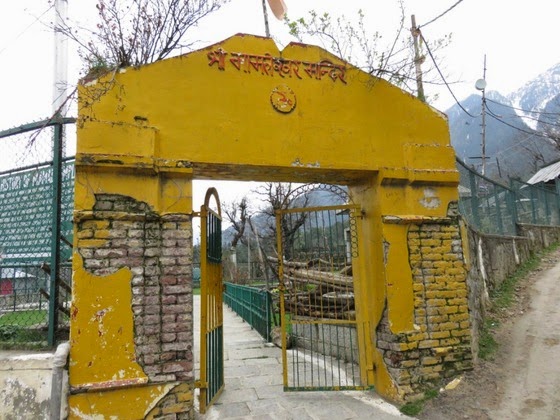
Temples of Kashmir-Kashyapa Valley-Satisar

Mata kheer Bhawani Ragnyadevi
Tulla Mulla gandarbal
Ruins of ancient temple Avantipora
Vishnu and Sun temples abound here
Shiva and Rragnya devi
close up of Kheer Bhawani
Mata Devi Local Deity Pari mahal Srinagar
Uphill the Dara Shikoh built restored by the ASI on Pari mahal hill road we found the entry to this ancient shrine
Legend of local Mata rani deity Pari mahal
Local deity since medivial times
Durga Naag mandir city center Srinagar
Opposite Kohlee's Hotel good place to stay at Dal gate
Temples of Anantnag
Pandawas are supposed to have build these
Mohinishwar Shiva Temple -meadows center,Gulmarg
Jai jai Shiv Shankar song filmed here..
Many such writings on the wall stones seen in Kashmir
Just read such stone writings all over Kashmir ,i hope even POK.
Devi temple in Srinagar
If you manage to open locks go inside many temples in the city of devi SRI. Srinagar you will see many idols still intact
Mammaleshwar Shiva enroute Amarnath
To see this drive uphill left the bridge..as you enter the Phal-Pahel gaon enroute Amarnath shrine..
Shiva Temple Pahelgaon 2
The facade of Mammaleshwar Shiva temple is maintained by the ASI well
Shiva Darshan Mammaleshwar temple
Pahalgaon uphill ASI maintained site
Shaarkaa Devi temple on hari parbat south
easier approach from down devi chowk is now more difficult as Pandits have left..their homes around this Hindu area once..was..
tri pura sundari icon Sri yantra hotspot
Compare Adee Shankaras treatment of yantra at Chadra badani where he put a stone slab over it to stop yantra worship..Abhinava Gupta reigned in Kashmir so this form not nirgun but with aakaar a yantraa..??
Devi Darshan
The Main Devi at top temple on hari Parbat the fort crown of kashmir valley
Hari Parbat main shrine on top
Take special permission from Nigin CLUB office of jktdc then go climb hari parbat to see two main shrines
One of the many Locked temples Badam wari
Amar Kaul Temple locked at base hari parbat north end gate no 2 Badam warii.
Spires of so many temples praying for revival Temple sires seen at Badam wari
Pahelgaon central temple
Shiva Shakti temple Phalgaon
Sonmarg Shiva Shaktee temple
Army maintains so many of the temples as men who fight gaurd the nation and its borders internal security needs place of worship too. Many others i failed to go and click ..for you to go and add to this album..Temples of kashyapa valley Kashmir

The path you choose reveals a lot about your personality!

A personality quiz that you just can’t miss!
I am bringing this to you because I was shocked about the accuracy of this quiz! Here’s how the quiz works – In the next slide you will see 14 very different paths that will lead you into a forest. The one you’re drawn to will not only reveal details about your subconscious, but also the path you’re on in life. So by the time you are done with this quiz, you will learn something more about your personality and your future!
Are you ready?
To take the test, start by finding a relaxing spot in your home. Take some unruffled breaths, close your eyes, and enjoy the calmness inside. When you’re ready, open your eyes and examine the picture on your left. Which path are you going to choose?
If you have chosen Path 1
You are action oriented with a deep need for physical fulfillment and to experience life through the five senses. You're a loyal friend to the end! Conservative, but always friendly and inclusive of others - not the life of the party, but always at the party. Sometimes really bland, but whatever — people still like you so who cares. You make a good boss, as you tend to influence others rather than be bossy and demanding. You are confident and find public speaking to be easy - with your ability to focus and concentrate on the most important things and your capacity for clarity of thought, communication comes easy to you.
If you have chosen Path 2
You have a great need to be with people, to socialize with them, and be accepted and respected as part of a group. You also have a need for challenges in your life, whether it is physical or social challenges. You like structure in your life. The trick for you is to create order that is not overbearing. The appropriate amount of structure will allow you to live a calm, orderly life. You have high hopes for the future and will do what it takes to make them come true. You are good at multi-tasking - focusing on one thing at a time bores you. You have strong powers of perception and can be selective and discerning, balancing the pros and cons of any situation, then identifying the best way forward.
If you have chosen Path 3
You have a deep need to belong, to love and be loved, and to feel safe and secure. You need acceptance and acknowledgment for the everyday things you do for others - just a 'thank you' is sufficient. You are the mother figure of your friend group. You are always comforting and great at bringing people together. You are passive, which can be a bad thing when you let other people overshadow what you've worked hard to accomplish. Your thinking can become scattered at times, particularly when you try to accomplish too much at once. This can overtire you and you become emotionally out of balance.
If you have chosen Path 4
You have a deep need for logical order in your everyday life and to be able to express your individuality by using your logical mind to inspire and create new ideas. You like to challenge the norm, but you also appreciate limits. You are a free-thinker who will change the world by questioning traditional standards along the way. With your optimistic and positive outlook on life, you see the good in everyone. The challenge for you is to become more self-reliant and to learn to love yourself, then love and acceptance will be returned to you multiplied. You can be self-centered, tuning in to your own needs to the exclusion of the needs of others.
If you have chosen Path 5
You have a deep need to find inner peace and truth, to live their life according to their ideals and beliefs without having to change their inflexible viewpoint of life to satisfy others. You appreciate security. You understand that there is risk in the world, and you generally like to avoid it. You set yourself up for success by anticipating future threats and preparing for them. You can be boastful and narcissistic, appearing egotistical and conceited. You fear being alone and can become aloof and unapproachable when this occurs, making the situation even worse.
If you have chosen Path 6
You have a need to feel in harmony and at one with the Universe and to be accepted by others as the aware and intuitive spiritual beings that they are. You are a free spirit open to trying new and exciting things. You've never had a desk job, instead opting for more exciting temporary positions. You have a heightened sense of creativity and sensitivity. You speak from the heart and love sharing your inner most thoughts.
If you have chosen Path 7
You have a deep need for emotional security and to create order and perfection in all areas of your life, including your spiritual life. You also have a deep need to initiate and participate in humanitarian projects, helping others in need. Your search for meaning and fulfilment you sometimes isolate yourself from others as you reflect and ponder on the deeper questions of life. You are imaginative and creative, particularly in expressing yourself with the written word.
If you have chosen Path 8
Your deepest need is to create emotional balance in your life, to be able to express your hopes and dreams no matter how idealistic they may be and to make your own way in the world under your own terms. Change does not frighten you, in fact you welcome it. Your wisdom, self-control and sense of responsibility, will usually assist you to make good decisions fairly quickly. You live from your heart and are always busy putting the needs of others first.
If you have chosen Path 9
Your deepest need is for simplicity in your own life and to be independent and self-reliant so you do not need to depend on anyone else. You can be shy and old-fashioned, but once you trust someone you're able to form lifelong friendships. Even though you're quiet, you take strong stances on things. You hold grudges forever. You would benefit from daily meditation and quiet time for reflection, introspection and self-discovery. You appear to be confident and self-controlled, but may be hiding your vulnerable side.
If you have chosen Path 10
You are the middle of the road type, cool, conserved, composed and reliable. You tend to conform just to keep the peace. You're a delicate soul –– someone who needs a lot of love and affection to thrive. You definitely prefer the country to the city, and enjoy long hours of knitting in front of the fire. You like others to anticipate your arrival to ensure the best possible interactions. You place a high value on personal connections. You will have solid relationships to rely on throughout your life.
If you have chosen Path 11
You are intuitive and insightful and have a strong connection with a higher spiritual guidance. You take some time to warm up to. At first you don't seem very approachable, but as people get to know you they fall in love. You are a hard worker, but always elegant at whatever you do. You tend to have an understated air of sophistication, dignity and classiness about you. With a combination of good looks, talent and personality many would deem you to have luck on your side. You are gracious, gentle and non-aggressive with strong values and morals.
If you have chosen Path 12
You radiate charisma, personality and individuality, making others feel relaxed and valued in your company. You seek serenity in your life. Your affinity for calm in this hectic world bodes well for your ability to handle stress. You are not impulsive or spontaneous - you always think before you speak and act and do everything at your own pace in your own time. You take time to process and share your feelings. You are genuine and sincere, and you take your responsibilities seriously.
If you have chosen Path 13
You've got a wild side, but an old soul. Someone who wants to travel the world, but ends up reading books on the beach for vacation instead of seeing the sights. You'll open up to just about anyone –– friends, strangers, doesn't really matter. You'll take on many lovers during your lifetime. You like to know exactly where you are going in life. You do not like surprises, and you make choices that ensure you deal with as few as possible. Your careful planning will ensure you lead the life you want.
If you have chosen Path 14
You have a mysterious, elusive soul. You're a hard worker, an entrepreneur, and the person everyone wants to be seen with. But don't let stardom or partying interfere with your goals. You guys tend to be kind of lonely. Although presenting a cool and calm exterior, and appearing to be stable and balanced, beneath the surface you may be in chaos, on an emotional roller coaster ride. You are self-sufficient, with good self esteem and ability to love and care for yourself. You are a clear thinker and good decision maker.

Why is Krishna called Giridhar?

God's names are innumerable
Without doubt, God's names are aplenty focusing on features, characteristics, incidents and also on the feelings of devotees. The names of the Lord keep on adding with every passing era.
All names are of God's
Another way of putting it would be that all names belong to God, because we believe that everything belongs to God.
Krishna has many names
Likewise, the avatar of Lord Krishna has many names ascribed to him. Krishna was engaged in number of Leelas and he got lot of sobriquets and monikers due to that.
Giridhar is one them
A very beautiful name ascribed to Lord Krishna is Giridhar or Giridhari. This name became more popular when the devotee-saint Meera Bai used it extensively in her devotional poetry.
But why this name?
But why Lord Krishna is given this name? Is it an event based or describes one of his features or characteristics? We will explore the reason in this article.
The incident
Govardhan Parvat is associated with Gokul--a village that worshiped Lord Indra. It's this mountain (Giri) that Lord Krishna held on his hand (Dhar), and subsequently was called as Giridhari.
The story goes like this
Indra, the god of rains, was propitiated by the villagers of Gokul under the leadership of Nanda, the foster father of Sri Krishna. Indra was a fierce god and used his power of thunder and rain to make people worship him. People worshiped him out of fear.
The promise given to Govardhan Parvat
In the previous avatar as Lord Rama, mountain Govardhan was given a promise that he will used by God in the next avatar. The mountain was being carried for making the bridge to Lanka when word reached that no more stones are required. Govardhan parvat cried that it failed to serve the Lord--his devotion moved the heart of God and he promised that he will be used in the next avatar.
Going against Indra
Sri Krishna, who realized that Indra was a power monger, argued that instead of worshiping Indra, the village should worship Govardhana as he was the one who was protecting us from natural calamities and he also blocked the clouds and thus brought rain. A very scientific approach it would seem.
The village started worshiping the mountain
Krishan was already the favorite of the village, and the people found this logic to be true and started performing Govardhana puja. This infuriated Indra, who brought torrential rain in Vraj region.
Krishna needs to save the village
Because the change in routine was called upon by Krishna, the villagers accused Krishna for this ordeal. Krishna asked to take refuge at Govardhana. As we had worshiped it, the holy mount would protect us, he said.
Lifting the mountain
On approaching the mountain, Sri Krishna lifted it with his little finger and gave refuge to all living beings in Vraj under the mount. This holy act earned Sri Krishna the name Giridhar. Indra was humbled and people stopped worshiping Indra from the day.
The inner significance
This holy act symbolically extols humans to not to surrender before calamities. Though nature takes a furious form of destruction, but God has provided us means to protect ourselves and rebuild our lives.
The image of child Krishna
At the time of this incident, Krishna was in his childhood and the image of a child Krishna lifting the mountain has etched in the memory of every devotee.
Have you seen it?
I am sure you must heard or seen this incident depicted on a poster or calendar or heard the name Giridhar in a bhajan or a song. Let's offer our prayers to 'The lifter of the mountain'!

Tuesday, May 12, 2015

Being stingy is the problem, not greedy

By Sadhguru Jaggi Vasudev Economic Times
Once, it happened that a newly married woman went back to her mother’s place and said, “My husband is such a wonderful man. He gives me whatever I ask for.”
The worldly-wise mother looked at her and said, “Obviously, you are not asking for enough.”
A human being should seek nothing less than everything. Greed is the rule. When he seeks everything, small things will not keep his attention. He will not be thinking of food, currency, or pieces of property — he will be thinking of the largest possibility.
If you desire for everything, would ten crore rupees be a big thing on your mind? It would be nothing for you. The planet Earth would also not be a very big object in your mind. It is a tiny piece of nothing in this vast galaxy.
If you become absolutely greedy, then you become spiritual. If you are stingy in your greediness, you just become materially greedy. It is stinginess which is the problem, not greed.
You are so stingy that you will not smile fully, laugh fully, cry fully, dance fully, sing fully, or do anything fully. This is stinginess, not greed. If you are greedy, you would aspire that not just you, but everything in the existence should be well.
(Sadhguru Jaggi Vasudev is a prominent spiritual leader, author and poet www.ishafoundation.org)

Disease of Modern Society

ISHA FOUNDATION
Cancer is not really an ailment in the standard understanding of what an ailment is. In some way, the cells in our own body are turning against us; it could be stimulated or instigated from outside situations. The number of stimulations or instigations from the outside has considerably increased in these so-called “modern societies,” and there are innumerable reasons why this happens. To look at it in a very fundamental way, it is a bad organization of the five elements – earth, water, fire, wind and space. The way we consume food, drink water, and the type of air that we breathe are affecting our system and forcing it to turn against itself. Genetic factors may set a predisposition, but it is not the actual cause of cancer.
Reversing this trend is not an easy process because society is lunging towards a certain type of lifestyle that is bound to disturb the human system in many different ways. Because of the use of chemicals and preservatives in food substances, and the air and water we have poisoned, the incidence of cancer is only geared to rise. One simple thing we can do is move into more natural atmospheres where we breathe fresh air, drink clean water from nature – not from the bottle – and eat food that is grown from land around us. In the yogic system, it was always said that you must only eat food from land near you, within a walking distance of one day. Today, such a thing is not possible. We are very proud of our apples from New Zealand and Australia, our grapes from China, something else is coming from somewhere else. We are proud of the way we have built our market capabilities. It is wonderful on one level, but it has its consequences.  
Medical science has found many solutions, but it does not matter how many solutions they find, there will be new problems because that is the nature of life. If you try to block something one way, it will find another way and another way. More and more complex forms of cancer will come as we learn to treat it with medication in its existing forms. This is something modern societies have to live with because being modern has become synonymous with being unnatural. If you live naturally, as nature dictates, you are considered archaic. Only if you are completely divorced from the natural process of life are you considered modern. The increase in the number of people being diagnosed with cancer is in part due to more efficient detection. Earlier, many people died without diagnosis. Still, until we change this fundamental idea of modernity, which works against our own well-being, the rise of cancer will continue.
The complex influences happening upon our body is not something one can yet figure out because too many things are happening around us, including the vibrations we have set forth in the form of telecommunications, microwaves and other varieties of transmissions. In Bengaluru, for example, the whole city is buzzing; you cannot hear anything apart from the disastrous traffic. In that region, there used to be millions of sparrows, but most of them have fallen dead due to the radiation effects and electromagnetic fields of mobile phone towers.  Human beings may be a slightly bigger form of life, but do not think the damage has not been done. Certain studies show what kind of damage these reverberations do to the human system.
Our exploration of technology is quite juvenile and childish.  Whatever we can do, we want to do, and only determine the consequences twenty-five years later. Until our science and technology matures into using only what is good for us and rejecting what is not, in spite of all the attraction, and its commercial value, the rise of cancer will continue. I know it is not possible in today’s life to avoid these things; even to read this Spot you are in front of your computer, so you are not only getting my vibes but the computer’s vibes! You can’t help it; it has become a part of life to go through this. But, to whatever extent possible, you can at least keep your areas of sleep and meditation free from these reverberations. It is not a one-hundred percent solution, but if we bring in yogic practices, and lifestyle choices that are more oriented towards our natural existence, we can definitely reduce the percentage of cancer.

Monday, May 11, 2015

Hindus Must Unite or Face Extinction

by Stephen Knapp
The typical Indian mentality and the path of Hinduism, or the Vedic path of spiritual progress, is one of great individuality and freedom for each person to decide what they want or what is best for their own spiritual development. Thus, it is typical for Hindus to work on their own, not necessarily as a group. There is nothing wrong in that. It is the last of the great cultures that promote the utmost freedom for the individual. But, yet, there is a great need that is not being met, and that is the need for Hindus / Dharmists / Devotees, especially in India, to unite and work together as a group, or even as a whole society, in order to continue to preserve and protect their own culture, traditions, and certainly the freedom of the individual.
This freedom is being threatened in many ways today, although there are those who either refuse to admit it, refuse to see it, or are hesitant to work together to save it. This blindness and hesitancy must be overcome.
Throughout India, for example, there are portions of the population that belong to particular religions, such as Muslims, Christians, Sikhs, Buddhists, etc., and they often work as a strong section of society to protect their rights, freedoms and traditions. Especially Christians and Muslims vote as a block to promote and vote into office particular politicians they favor, and who favor them. They also will create an uproar when something happens against them, or when someone desecrates their religious texts. They hold demonstrations or even riot when a mosque is threatened. Thus, they get there way, or at least people begin to hesitate before doing something that will make them upset.
However, it seems that the Hindus are the most apathetic in this regard. Though they are increasingly beginning to wake up to the importance of being heard and making themselves be noticed, they are still, for the most part, letting their influence and the power of numbers that they have as the majority of the Indian population simply slip through their fingers.
It is time we learn that apathy is a disservice to Dharma and society. It accomplishes nothing, if that is not obvious. It lets the needs of the Dharmic society go unnoticed. The point is, if we do not take care of ourselves, no one else will. And there are people counting on that apathy to get their way and do things against the well-being of the majority Hindu population. And we are letting them get away with it. This hurts those who follow Vedic Dharma, and takes away the confidence that people need to maintain their practice of the Dharma.
Those who say that Sanatana-dharma is eternal and, thus, there is no need to worry about the future, do a great injustice to the Vedic cause and to humanity. Those who say that Vedic culture has lasted for thousands of years and will continue to last for thousands more show a poor excuse for apathy. Though it is eternal, which is the meaning of Sanatana, this does not mean that it will always remain a prevalent force on the face of the earth. It can also decline into obscurity if we let it.
Those who feel that there is nothing to worry about need to understand why the Bhagavad-gita was spoken. Arjuna did not want to fight, and who does? No one wants war, at least if they are in their right mind. But how many people of particular religions cry for war, or jihad, toward anyone who is not a part of their religion? Arjuna wanted to leave the battlefield and go to the forest to meditate, as if that would solve all of his problems. But Lord Krishna said he was acting foolishly. Lord Krishna told Arjuna that he should indeed fight, but fight for what? He was to fight to uphold the Dharmic principles that the Kauravas were neglecting. Lord Krishna specifically went to the Kauravas to try and arrange a diplomatic means to keep everyone happy and prevent war, but they would not listen. Finally, there was no alternative but to fight. And so the sides were drawn against those who fought for Dharma and those who fought for their own agenda.
We could also say that we should simply let the good Lord take care of everything. If something is meant to be, then the Lord will take care of it. But that is not the result nor the premise of the Bhagavad-gita. Lord Krishna showed that everything may rest on Him as pearls are strung on a thread, but we all must do our part. It is up to us to protect Dharma if we are indeed expecting to continue to have the freedom to practice and follow it.
Vedic culture has been attacked for the last 1200 years. India’s history can easily show that. And it was the heroes of India, and the millions of average everyday people of India, Hindus, who gave their lives and underwent severe torture that kept Vedic Dharma alive for future generations, and for the freedoms that we have today that allow us to continue these traditions. Are we now to let those freedoms die, after so many sacrificed their lives for us, for Vedic Dharma? This would be a great dishonor to their memory and for the cause they fought for. We cannot allow this to happen, but we also need to be aware of the warning signs of what is happening around us.
This is why, with a growing Muslim population in India, and all over the world for that matter, Hinduism in India could be dead in another 100 years. Just by their high birth rate alone Muslims are increasing their presence in India. Thus, one hundred years from now Vedic Dharma may only be practiced in small pockets here and there, such as in various holy places, as long as the majority Muslim population allows it. The fact is that history has shown that Muslims have a very low tolerance for anything that is non-Muslim. You can see this in the ever decreasing non-Muslim population in Pakistan, Bangladesh, Afghanistan, Arabia, etc., etc. They have never allowed complete freedom for non-Muslims in any Islamic country, and have passed laws against them and persecuted them and destroyed their temples and monuments, kidnapped and raped their women, and killed thousands of Hindu or Christian men. So, why should we expect India to be an exception? They have already shown what they did in India.
A rising Muslim minority in India does not have to become a majority to begin changing laws in their favor, but simply by being a noisy and disturbing minority they will gain the upper hand. Increasing their political maneuvering will give them political clout and power. And when they do come closer to being a majority, they will certainly increase the persecution of an infidel Hindu population until they are finally extinct.
Over 400,000 Hindu Pandits were chased out of Kashmir, and what was done about it? Take notice of how Assam is becoming the new Kashmir with nearly 80,000 people being displaced, having left their villages due to fear from the incoming and growing Muslims. And now the Muslim political party in Assam is demanding a separate and autonomous region in southern Assam just for Muslims. Is this not the same pattern we have seen time and time again? And is anyone doing anything about it? Is anyone speaking out that another chunk of India is threatened with being lost? In due course, what will be left of India if this keeps happening?
Even now the Muslims of India, though they have a Hindu ancestry, no longer identify themselves as Indians but as members of the house of Islam. Thus, they are only taking care of unfinished business from their previous invasions and war against Hindus. Hindus often do not conduct themselves in a powerful way. And when they do, the Indian media is completely against them. The secular media in India does not mean secular, it means to bend over backward showing preference for the minorities at the expense of the Hindu majority. Thus, secular media in India means to be anti-Hindu. But should that stop Hindus? They cannot afford to be overly considerate of what others think when their own future is at stake.
The next ten to 15 years will be a major turning point and show the deciding factor for the future of Vedic Dharma on the face of the planet, particularly in India. The thing is, even now we practically have more freedom to practice Vedic culture in America than we do in India, in its own homeland. Will America be one of the final strongholds for Vedic Dharma? Will we have to one day export it back to India from America?
Therefore, we have to ask ourselves, will our temples still be here in India in another 40 to 50 years? Or will they gradually disappear because of Christian conversion tactics, Muslim persecution against Hindus, or because corrupt politicians who care little about Vedic culture take over temples to possess and sell their assets for the money? Hindu temples are known for being income producers, for the most part. While the Indian government cares little about possessing churches and mosques because they need funds, they use more money than they bring in. It is the temples that are income producers because of the Hindu majority population that give to them.
Therefore, there is no doubt that Hindus must unite as a society while there is still time to make a difference.
CHANGES THAT NEED TO TAKE PLACE
The time to act is now. Some of the things Hindus / Dharmists / Devotees need to do include:
1. Hindus must unite and vote as a bank in all elections to oust those who disregard Hinduism and vote in those who do. They must never take an election for granted. They have done so in the past with terrible results.
2. Hindus must get involved in politics in various ways to help direct the actions of the government.
3. India must also change its politicians in order that it as a nation takes a stronger stance against those who try to bring India down, and to take a stronger stance to defend itself militarily. India cannot afford to be a wimp. There is a need for younger leaders who are more aware of how to fulfill the needs of India.
4. Hindus must work to unite all Hindus. They must wake up other Dharmists about the need to take action. This may be a daunting task, but let everyone become involved in the action plans that will make a difference for their future, for their culture, for preserving their tradition, for protecting the rights and freedoms of the individual, and certainly for the well-being of their children. Work for the freedom to continue to construct and manage their own temples without interference from the government.
5. The spiritual leaders and acharyas must reach out to the villagers and people of all classes in order for the people to feel cared for, and that they are a part of and belong to the Dharmic tradition and are welcome in the temples. They should feel that they are not neglected, but that they are wanted and needed in the greater cause for Vedic Dharma.
6. Indian Hindus must take care of their own people, those who are poor, destitute and disadvantaged, or others will. And those others are often quick to try to convince them of the shortcomings of Hinduism, and, thus, through the guise of welfare activities, try to convert the poor into leaving Vedic Dharma and become Christians or something else. It is true that those who convert for material facility are not strong converts because they could just as easily convert back to what they were once their financial status improves. However, if a child is converted and stays in that fold for 10 to 15 years, it is not likely they will ever want to reconvert back to Vedic Dharma after being a Christian for so long. Thus, from that generation forward, that family will likely continue to be non-Dharmists. Children of converted families who remain outside of the Dharmic fold for that length of time will have little impetus to change.
7. All Dharmists must be educated in their own culture, philosophy, and tradition to understand it clearly, and know how to explain it to their children and others. Thus, they can also be convinced of the deep and profound nature of what they already have, and be less likely to ever want to convert to something else.
8. When anything in the media appears to depict Vedic culture in a poor light, or when someone like a politician says something against one of the Vedic Divinities, there must be an immediate outrage or lawsuit established against such a person or incident. If people begin to see that an immediate and strong reaction takes place whenever Vedic Dharma is poorly or inaccurately portrayed, or when someone denigrates the Bhagavad-gita or one of the Vedic texts, they will begin to hesitate or even stop before doing such things in the future.
9. There must be regular programs at temples for the education of all, and book distribution to help spread Vedic spiritual knowledge to everyone far and wide.
10. Everyone should engage in a cultural revolution in which we promote the true understanding of Vedic Dharma. This is one of the best ways to spread the beauty and freedom found in the lofty spiritual knowledge that can attract everyone. Westerners are especially and increasingly being drawn to the beauty of this spiritual path. So, Indians should have no doubt of its potency and work to maintain India as the homeland of a dynamic and thriving Vedic tradition.
11. Dharmists / Hindus must work to do service for their temples and community to take care of everyone and maintain what they have, namely their temples, their right to peacefully observe the Vedic ways, and care for the people who turn toward the Dharmic path.
Such changes can only take place if Hindus unite and stand strong for Dharma and work together. We have to drop the apathy, discard our ego, along with ethnic and class distinctions and join together under one identity and for a primary cause. We must act like Arjuna did after having received the instructions of Lord Krishna to stand and fight for Dharma rather than going off into the forest to get away from everything and meditate, as if that would solve his dislike to do battle against those who had chosen the side of adharma.
If Hindu Dharmists do not do this, and remain as they are, being apathetic and inactive, it is but a prescription for a slow extinction. They may lose it all, certainly the freedom to choose what they want to be. Only we can change the future by being pro-active and united in this way. Then Sanatana-dharma will remain on the face of the earth as a path that we have the freedom to follow. Do we want to see Vedic Dharma as the tradition of the majority population in India in another 100 years, or will it become a thing of the past, like a museum piece? This is what has happened to the Maya, Inca, Egyptian civilizations, and many others. The choice of what happens in the future is ours by how we act and work together now.

Saturday, May 9, 2015

11 stories from Mahabharata that you still don’t

Untold tales from Mahabharata
The Mahabharat is one of the two major epics in Sanskrit of ancient India. It contains over one lakh couplets and is thrice as long as the Bible. However, only a fraction of the narration actually deals with the main story with the rest containing additional myths and teachings. It clearly states: “what is found here may be found elsewhere but what is not found here cannot be found elsewhere.” Take a look at some untold and unknown stories from this great scripture…
1. The story of five golden arrows
As Kaurawas were losing the battle of Mahabharata, Duryodhana approached Bhisma one night and accused him of not fighting the Mahabharata war to his full strength because of his affection for Pandavas. Bhisma greatly angered, immediately picked up 5 golden arrows and chanted mantras declaring tomorrow he will kill 5 pandavas with the 5 golden arrows. Duryodhana not having faith in his words asked Bhisma to give custody of 5 golden arrows saying that he will keep them and will return them next morning.
A flash back
Long back before the Mahabharata war, Pandavas were living in exile in a forest. Duryodhana placed his camp on the opposite side of the pond where Pandavas were staying. Once while Duryodhana was taking bath in that pond, the heavenly prince Gandharvas also came down. Duryodhana picked a fight with them only to be deafeted and captured. Arjuna saved Duryodhana and set him free. Duryodhana was ashamed but being a Kshatriya, told Arjuna to ask for a boon. Arjuna replied he would ask for the honour gift later when he needed it.
Arjuna asks for his gift
It was during that night of Mahabharata war, when Krishna reminded Arjuna of his unsatisfied boon and told him to go to Duryodhana and ask for 5 golden arrows. When Arjuna asked for the arrows Duryodhana was shocked but being a kshatriya and bound by his promise he had to honour his words. He asked who told you about golden arrows, Arjuna replied who else other than Lord Krishna. Duryodhana again went to Bhisma and requested for another five golden arrows. To this Bhisma laughed and replied that is not possible.
2. The birth of Dronacharya
The birth of Dronacharya, the Guru of the Pandavas and Kauravas in the Mahabharata, is very interesting. It would not be wrong to say that Dronacharya is the first test tube baby in the world. Rishi Bharadwaja is the father of Dronacharya and mother is an Apasara name Krithaji. One evening Rishi Bharadwaja was getting ready to do his evening prayers. He went to the Ganga River to take his usual bath but was amazed to find a beautiful woman bathing at his usual spot in the river.
First test tube baby?
On seeing Rishi Bharadwaja, the beautiful Apsara Krithaji got out of the Ganga River wearing a single loin cloth. Rishi Bharadwaja was moved by the heavenly beauty of the Apsara. Overpowered by the moment, the sage involuntarily emitted his semen. The Rishi collected this sperm in a clay pot and stored it in a dark place in his Ashram. Drona was born in this pot. 'Dronam' means pot and 'Dronar' is one who was born from the pot.
3. Sehdeva ate his father’s brain, literally!
When Pandu, the father of the Pandavas, was about to die, he wished for his sons to partake of his brain so that they inherit his wisdom and knowledge. Only Sahadeva paid heed, though; it is said that with the first bite of his father’s brain, he gained knowledge of all that had happened in the universe. With the second he gained knowledge of the present happenings, and with the third he came to know of all that would occur in the future.
A vow of silence
Sahadeva, often relegated to silence in the story along with his brother Nakul, is known for his prescience. He is said to have known all along that a great war would come to cleanse the land, but he did not announce it lest that would bring it about. As it happened, staying silent about it did not help either.
4. When Duryodhan approached Sahadeva
Sahadeva who had eaten the flesh of his father Pandu after his death could not only see past, and future but also had a great knowledge in Astrology. This is the reason why Shakuni sent Duryodhana to Sahadeva to ask the mahurat (right time) of the Mahabharat War. Sahadeva being honest had disclosed it to Duryodhan in spite knowing the fact that Duryodhan was his real enemy in the battle.
5. Balarama was Abhimanyu’s father–in–law
Abhimanyu ‘s wife Vatsala was the daughter of Balarama. Balarama wanted that Vatsala should marry Laxman, Duryodhana’s son. Abhimanyu and Vatsala both loved each other and wanted to get married. Abhimanyu took the help of his brother Ghatotkacha (a daitya) who tricked Laxman and terrified him. Ghatotkach then flew away with Vatsala and went to his brother Abhimanyu. Laxman was very upset from all this and he vowed that he will not marry throughout his life.
6. The sacrifice of Iravan
Iravan, the son of Arjun and naga princess Uloopi, sacrificed himself to goddess Kali to ensure the victory of his father and his team in the Kurukshetra war. He however, had a last wish – He wanted to marry a girl before he died. Now, getting a girl who knew her husband would die in few days was a tricky task. So, Lord Krishna took the form of Mohini, married Iravan and even wept like a widow after her husband died.
7. Dhritarashtra had a son with his maid servant
Yuyutsu was born to Sauvali, a maid servant who attended Dhritarashtra and looked upon the royal household. Sauvali was not kshatriya but belonged to the Vaishya class. She was appointed to look after Dhritarashtra when Gandhari was declared pregnant. Dhritarashtra was mesmerized by the maid’s charm and used her, both for his physical and sexual gratification. Thus, was born Yuyutsu, the dasi putra of Dhritarashtra.
8. Duryodhana’s dilemmas
Duryodhan is lying in the battle field, awaiting death, badly bruised by the wounds inflicted by Bhima. He kept his three fingers in a raised position and is unable to speak. All the efforts made by his men to understand the meaning proved to be futile. Seeing his plight Krishna approached him and said "I know what issues occupied your mind. I will address them".
Questions and their answers
Krishna identified the issues as - not building a fort around Hastinapur, not persuading Vidur to fight the battle, not making Aswathama the commander-in-chief after the death of Dronacharya. Krishna explained further that if you would have built a fort, I would have asked Nakul to mount the horse and destroy the fort; if you would have succeeded in persuading Vidur to participate in the battle, I would also fought the battle and if Aswathama was made the commander-in-chief, I would have made Yudhistir angry.
Duryodhana could peacefully die
On hearing this Duryodhan closed all the fingers and within seconds he left his body. Many of us do not know that Nakul can drive his horse even in heavy rain without getting wet. He travels with such a speed between a drop and another drop, without getting wet. Only Nakul can do this among Kaurav and Pandav warriors. It also seems that if Yudhistir gets angry, everything that falls within the range of his eye sight will be burnt.
9. How Udupi fed the Kurukshetra warriors
Five thousand years ago, the Kurukshetra war, between the Pandavas and the Kauravas, was the mother of all battles. All the kings – hundreds of them – aligned themselves on one side or the other. The king of Udupi however chose to remain neutral. He spoke to Krishna and said, ‘Those who fight battles have to eat. I will be the caterer for this battle.’ Many of the Udupi people are caterers even today.
No wastage
The battle lasted 18 days, and every day, thousand soldiers died. So the Udupi king had to cook that much less food, otherwise it would go waste. The amazing thing was that every day, the food was exactly enough for all the soldiers and no food was wasted. After a few days, people were amazed, ‘How is he managing to cook the exact amount of food!’ No one could know how many people had died on any given day.
Krishna’s maya
When someone asked the kind of Udupi, ‘How do you manage this?’ the king replied, ‘Every night I go to Krishna’s tent. Krishna likes to eat boiled groundnuts in the night so I peel them and keep them in a bowl. After he is done I count how many nuts has he eaten. If it’s 10 peanuts, I know tomorrow 10,000 people will be dead. So the next day when I cook lunch, I cook for 10,000 people less.
10. Karna's Last Test
Karna was lying on the battlefield gasping for breath in his last moments. Krishna assumed the form of an indigent Brahmin and approached him wanting to test his generosity. Krishna exclaimed: "Karna! Karna!" Karna asked him: "Who are you, Sir?" Krishna (as the poor Brahmin) replied: "For a long time I have been hearing about your reputation as a charitable person. Today I came to ask you for a gift." "Certainly, I shall give you whatever you want", replied Karna.
Krishna asks for gold
"I want a small quantity of gold", said Krishna. Karna opened his mouth, showed the gold fillings for his teeth and said: "I shall give this to you. You can take them". Assuming a tone of revulsion, Krishna said: “Do you expect me to break your teeth and take the gold from them? How can I do such a wicked deed?” Karna picked up a stone, knocked out his teeth and offered them to the "Brahmin".
A step further
Krishna in his guise as Brahmin wanted to test Karna further. "What? Are you giving me as gift teeth dripping with blood? I cannot accept this. I am leaving", he said. Karna pleaded: "Swami, please wait." Even while he was unable to move, Karna took out his arrow and aimed it at the sky. Immediately rain dropped from the clouds. Cleaning the teeth with the rainwater, Karna offered the teeth with both his hands.
Krishna reveals himself
Karna asked: "Who are you, Sir"? Krishna said: "I am Krishna. I admire your spirit of sacrifice. In any circumstance you have never given up your spirit of sacrifice. Ask me what you want." Beholding Krishna's beauteous form, Karna said with folded hands: "Krishna! To have the vision of the Lord before one's passing is the goal of human existence. You came to me and blessed me with your form. This is enough for me. I offer my salutations to you."
11. A tale of true friendship
Once Duryodhana's wife Bhanumathi and Karna were playing a game of dice. As the game progressed, it was evident that Karna was winning and Bhanumathi was losing. Just then Duryodhana entered his queen's chamber. Karna had his back to the door while Bhanumathi was facing it. Seeing her husband coming, she was about to stand up. As she was just rising, Karna, thinking that she was trying to get away, snatched at her drape, studded with pearls.
The thread snapped
Tugged at by Karna's powerful hands, the thread snapped and all the pearls rolled on the floor. Queen Bhanumathi was stunned and did not know what to say or do. She was afraid that, for no fault of hers, she would be misunderstood by her husband because of Karna's offensive and insensitive behavior. Seeing her shocked state and sensing that something was wrong, Karna turned round and saw his friend Duryodhana. He was also deeply shocked and distressed beyond words.
A strong bond
Here he was, in the royal chamber, playing a game of dice with his friend's wife and, as if this was not enough, he had the audacity to catch her clothes, thus embarrassing and endangering her chaste reputation. He stood dumbfounded and transfixed. As both Bhanumathi and Karna look down sheepishly, unable to meet Duryodhana's eyes, the Kaurava scion only asks, "Should I just collect the beads, or string them as well."